
Water
How Much Water Should You Store?
5 min read · Last reviewed 20 September 2026
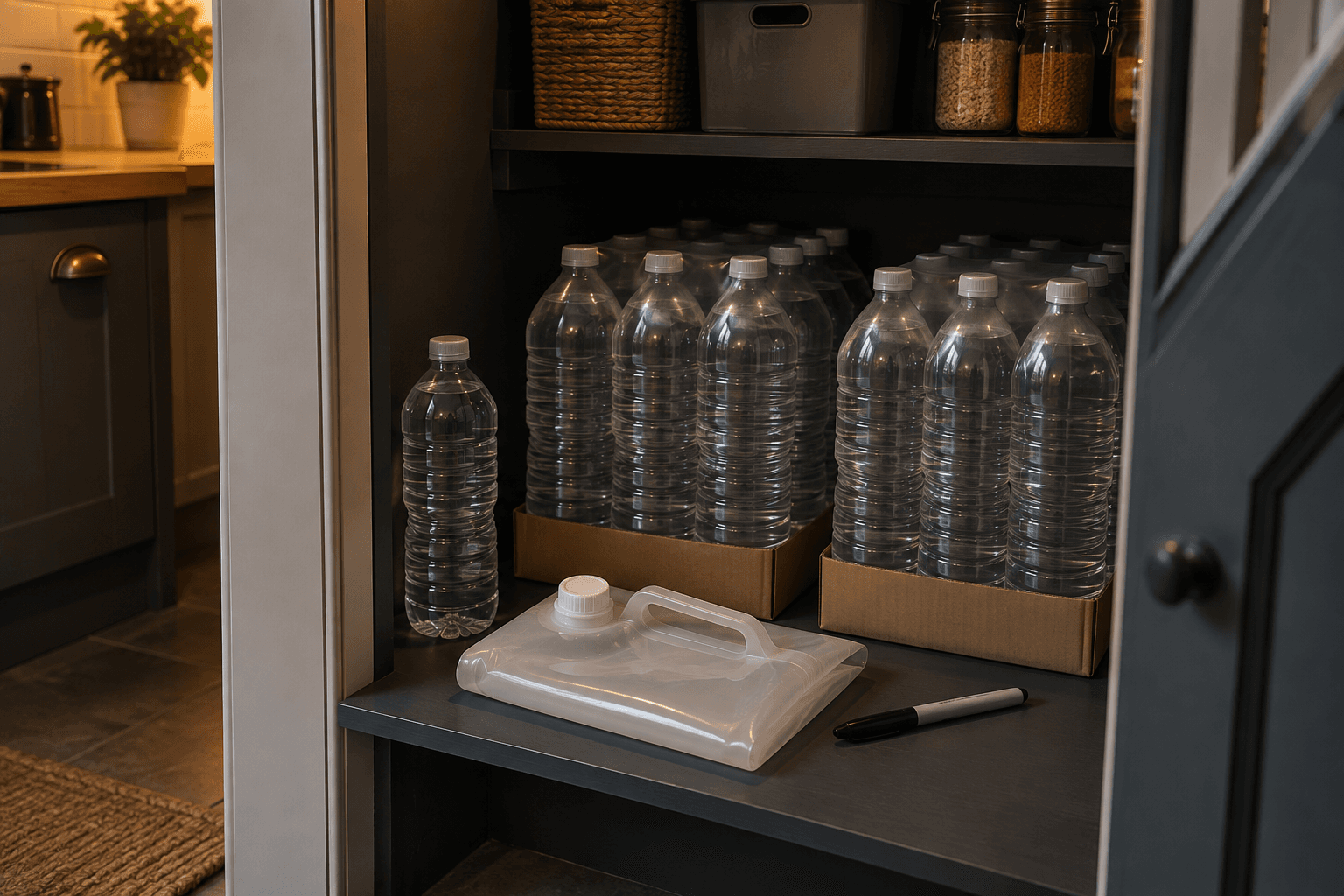
Official UK guidance points to a minimum of 2.5 to 3 litres of drinking water per person per day, and notes that 10 litres per person per day is more comfortable once basic cooking and hygiene are included. For bottled storage, 3 litres per person per day is the practical figure: about 36 litres for a family of four over 72 hours.
The rule of thumb, and where it comes from
The government's Prepare guidance is careful to say there is no single standard figure, because emergencies vary in length and people use different amounts. What it does give is a floor and a comfortable level: a minimum of 2.5 to 3 litres of drinking water per person per day, the figure the World Health Organisation gives for survival, and 10 litres per person per day to be comfortable once basic cooking and hygiene are included.
Those two numbers answer different questions. The 3 litres is what you need to store as bottled water, because it covers drinking and making up food. The 10 litres includes washing and cleaning, which does not have to be bottled and is better handled with a container filled from the tap.
If it is hot, if anyone is ill, or if someone is pregnant or breastfeeding, add more. The same guidance notes that extra water may be needed for baby formula, for medical devices and for pets, none of which is covered by the per-person figure.
What that comes to for your household
The arithmetic is simple, but seeing it written down is what makes people realise water is the bulky part of a kit. A standard supermarket multipack of twelve 1.5-litre bottles holds 18 litres.
| Household | 24 hours | 48 hours | 72 hours |
|---|---|---|---|
| One adult | 3 litres | 6 litres | 9 litres |
| Couple | 6 litres | 12 litres | 18 litres (1 multipack) |
| Family of four | 12 litres | 24 litres | 36 litres (2 multipacks) |
Storing it without losing a cupboard
Thirty-six litres is two large multipacks. That is genuinely awkward in a flat, and pretending otherwise is why a lot of preparedness advice gets ignored.
The compromise most households land on is a smaller standing supply of bottled water (enough for 24 hours) plus a collapsible container that folds flat in a drawer and can be filled from the tap when disruption is forecast. Storms and planned works usually come with warning; you rarely go from normal to nothing without notice.
Keep bottles somewhere cool and dark, off a concrete floor if you can, and away from cleaning products and petrol, because plastic is slightly permeable to strong smells. Under a bed and in the bottom of a wardrobe both work better than a garage in summer.
- A 24-hour bottled supply, plus a collapsible container to fill if warning is given
- Somewhere cool, dark and away from strong-smelling chemicals
- Write the date on the pack with a marker so rotation is obvious
- A bath filled at the first sign of trouble covers flushing, which is not drinking water
Rotation and shelf life
Shop-bought bottled water keeps well, but the plastic degrades slowly and the taste changes, so rotating every 6 to 12 months is sensible. The easiest method is to keep the emergency water where you would naturally reach for a bottle, and simply replace what you use. The stock stays fresh without anyone maintaining anything.
Long-life emergency water pouches exist with multi-year shelf lives. They cost considerably more per litre and are worth it only if you genuinely will not rotate, for example in a car boot or a grab bag that is rarely opened.
If the tap water is affected
Two things can happen. The supply can stop, or it can continue but become unsafe, in which case your water company issues a notice telling you to boil water before drinking it or not to drink it at all.
Under a boil notice, bringing water to a rolling boil and letting it cool makes it safe to drink. That requires a way to boil water, which in a power cut may not exist. That is one reason a small bottled supply matters even if you have a full tank of tap water.
Purification tablets are a cheap backup and treat a large volume for under ten pounds. A filter bottle is the more comfortable option if anyone is likely to be drinking from an unfamiliar source. Neither replaces bottled water; they extend it.
For longer interruptions, water companies arrange alternative supplies, typically bottled water collection points and deliveries to customers on their vulnerable-customer register. If someone in your household would struggle to collect water, it is worth asking your water company about that register before you ever need it.
The ones people forget
Pets need water too, and a collapsible bowl weighs nothing. If you have a baby and use formula, ready-to-feed cartons avoid needing clean water and sterilising equipment at exactly the moment both are hardest to come by. And if anyone in the house takes medication that has to be swallowed with water, that is a requirement rather than a comfort.
What this means for your kit
Water is the item where the quantity genuinely depends on who you are. The builder works it out from your household size and how long you want to be covered, and tells you how many packs that actually is, rather than leaving you to do the sum in a supermarket aisle.
Work out your household's figure
Tell the builder who is in your household and how long you want to be covered, and it will give you the litres, the number of packs and a guide price.
Build My Emergency KitCommon questions
- How much water should I store per person?
- Official guidance gives a minimum of 2.5 to 3 litres per person per day for drinking, and 10 litres per person per day to be comfortable including basic cooking and hygiene. For bottled storage, plan on 3 litres per person per day: 9 litres each over 72 hours, so roughly 36 litres for a family of four.
- How long does bottled water keep?
- Shop-bought bottled water is safe well beyond its best-before date if stored cool and sealed, but the taste changes over time. Rotating every 6 to 12 months keeps it pleasant to drink and keeps the stock part of normal life.
- Can I just store tap water?
- Yes, in clean food-grade containers, and it is a sensible thing to fill when disruption is forecast. For a standing supply, sealed bottled water needs no management and no cleaning of containers.
- Do I need water purification tablets?
- They are a cheap backup rather than an essential. They matter most if you have limited storage space, if you are preparing a grab bag, or if you live somewhere that has had repeated supply problems.
- Does water for washing count towards the total?
- Not towards the bottled total. The 3 litres per person per day covers drinking and food preparation; the official 10 litre figure adds basic cooking and hygiene. Washing and flushing water does not need to be bottled. A filled bath or a container of tap water covers it.
Useful sources
- Get prepared for emergencies (GOV.UK Prepare)
- Prepare (GOV.UK)
My Emergency Kit is an independent service and is not affiliated with or endorsed by the UK Government or emergency services. Our suggestions are general information for UK households, not professional, medical or emergency advice. In an emergency call 999.